
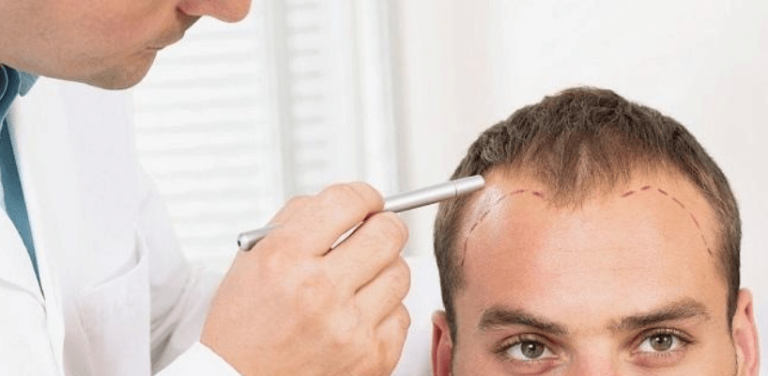
What is FUE hair transplant?
FUE, or Follicular Unit Extraction, is a hair restoration technique in which follicular units are removed one by one from the donor area and implanted according to a planned hairline, angle and density map.
The goal is not only to move grafts. A good FUE plan protects the donor area, respects natural growth direction and sets realistic expectations for density and recovery.
Who may be suitable?
- Patients with stable hair loss and adequate donor density.
- Patients who want a natural hairline and short recovery period.
- Patients considering scalp, beard, mustache or eyebrow restoration.
Who may not be suitable?
- Patients with uncontrolled medical conditions or active scalp disease.
- Patients with weak donor supply compared with the desired coverage area.
- Patients expecting guaranteed density or identical results to another person.
How the process works
| Step | What happens |
|---|---|
| Consultation | Medical history, donor area, hair loss pattern and expectations are reviewed. |
| Planning | The hairline, graft estimate, recipient zones and aftercare plan are explained. |
| Procedure | Follicular units are extracted individually and implanted with attention to direction and depth. |
| Recovery | Washing, crusting, shedding and growth milestones are followed with aftercare guidance. |
Hair transplant results vary by donor area, skin healing, hair caliber, age, hair loss progression and aftercare. Risks and alternatives should be discussed before treatment.
Common questions
Does FUE leave a scar?
FUE does not create a linear strip scar, but tiny extraction marks can remain. Donor planning helps keep them discreet.
When does new hair grow?
Temporary shedding is common. Visible growth usually starts gradually after the early healing period and continues over months.
How many grafts are needed?
The graft number depends on donor capacity, hair loss area, desired density and long-term planning.